Meghan Wolfgram + Pet Care Innovation Network
Why I HATED My MVP & Why it Was Perfect Anyway
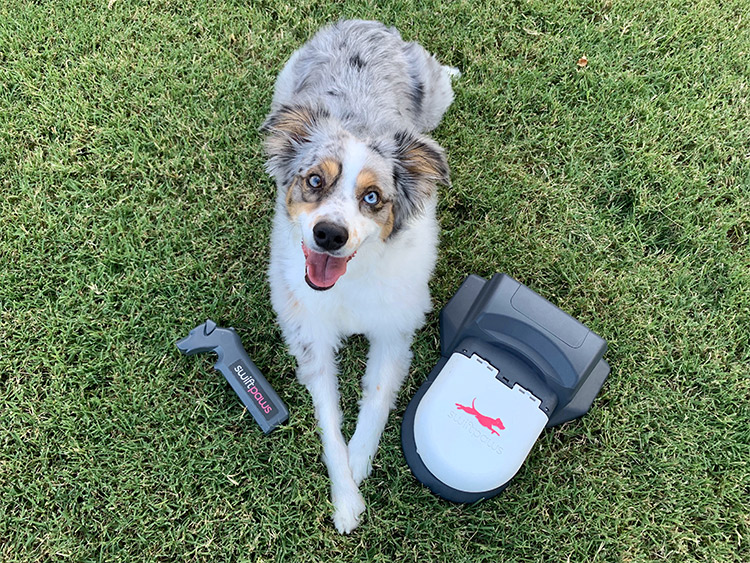
By the time we launched our first consumer-version of our product on Kickstarter I had been making, using, and selling a commercial version for nearly 7 years. I intimately knew my product and had an extremely clear vision of the requirements the consumer version had to meet.
The pro’s to having an extremely clear vision and list of product requirements:
- Made it easy to work with product development resources (begin with the end in mind) – a requirements list that changes, or extra requirements being added on can draw out the development process and increase cost
- Made it easy to communicate the product to our potential customers even prior to production
- Made it easy to stay focused on what was important to us, and what we were willing to sacrifice in order to get to market sooner or reduce cost
The con’s to having an extremely clear vision and list of product requirements:
- Created a tunnel vision where I focused on the requirements and didn’t spend enough time on the details.
- Resulted in some of the finer design points being left up to the contracted resources (I STILL regret having a base plate that attaches via ELEVEN screws when a snap-fit would have been just as good)
- Created a bit of a false sense of security, “IF we meet these requirements, it will be a great product”
I knew that the Minimum Viable Product for SwiftPaws Home MUST offer three core functionalities:
- Achieve variable speeds up to 30mph
- Be capable of running courses of at least 250’ long
- Be seamlessly reversible during use
In short, it had to be capable of running a flag back and forth at variable speeds (under the user’s control) up to 30mph on a course large enough for even a large/athletic dog.
We started working with development resources in earnest in Oct 2017 and launched our Kickstarter campaign in April 2018 with a mostly working prototype. The Kickstarter was successful, raising a little over $70k in 30 days. Then the real work began of finalizing design, pulling the trigger on getting tooling made, and sourcing all the ancillary/accessory components (spoiler alert: sourcing the “little” things like stakes and tethers was way harder than it seemed).
We committed to an initial production run of 1,000 SwiftPaws Home Kits. I’m grateful we didn’t commit to 2,000 because I’m one of only a few people who hand-soldered the wiring harnesses for that run, which brings me right to my list of reasons why, as a passionate founder who loves my product and brand, I HATED my MVP:
- We KNEW we were effectively making 1,000 prototypes to send out into the world, the wires were hot glued into place and our failure rate was nearly 20% for some assemblies. That led to a LOT of testing and a LOT of re-work before we could “pass” an assembly to be sent to a customer.
- While the product itself satisfied all 3 requirements, it missed the mark in several other areas including battery life, torque, and responsiveness (ie while it could get up to 30mph you had to give it a head-start otherwise a fast dog would catch it within a few strides)
- The remote was awful. It looked great, but users had to plug it in to charge it every few uses, the charging board would frequently come loose inside the remote effectively making it impossible for the user to charge, there was an of/off switch but no label/indicator of which position was which, there was an internal light on the charging board that indicated charging and full charge, however you had to be in a dark room to see it. I could go on, but you get the point. Awful.
- We did not have any time to cater to details like packaging – the first 1,000 went out in white boxes with bubble wrap to cushion components and a sticker on the box.
- We were very unhappy with the quality of a few of our sourced components like the lipo batteries, chargers, charging cables, tether straps, stakes, etc. The samples we received were GREAT and then then actual order was much lower quality. We ended up replacing MANY of these components under warranty and it’s taken us years to find reliable suppliers & accessories that we’re consistently happy with the quality of.
In short, our first production resulted in a functional, but somewhat frustrating product that took WAY too long to assemble and cost us WAY too much to support (through warranty etc).
BUT – all of that aside, our MVP was actually perfect. It allowed us to put an early version of our product into the hands of eager supporters/ early adopters (kickstarter and pre-order customers) and we received very valuable feedback that went directly towards improvements in our subsequent productions. Home Plus, launched in 2021 with an Indiegogo campaign is much closer to what I wanted the first version to be. It taught me that honesty and transparency are the best policy. Those early customers could have easily given up on us (and a few did), but our policy was that we would ALWAYS take care of our first customers, even if it meant admitting the product wasn’t perfect and offering them a full refund. So, when we came out with an improved version of the remote etc. we offered one time replacements AT NO COST to those initial customers.
Those initial units cost us about $90 in materials, but when you factor in assembly time, warranty cost, upgrades/warranty replacements, and ultimately the cost of completely redesigning a number of critical components, they probably ended up costing us closer to 3-4 times that. What they gave us, however, was incredible proof of market viability (and early traction), and a very clear direction for where the product had to improve.
In hindsight, the only things I might have done differently would have been to commit to a smaller initial production run, budgeting more time to spend running through assembly with prototype parts before committing to tooling, and budgeting more time between landing ordered components (especially for the first orders) and shipping to customers.
We’re now on our 3rd generation of product, which has improved our overall gross margins by more than 30% and allowed us to explore new sales channels and scale production. We’ve come a long way since our MVP, and we have it to thank for getting us into the hands of our first customers!